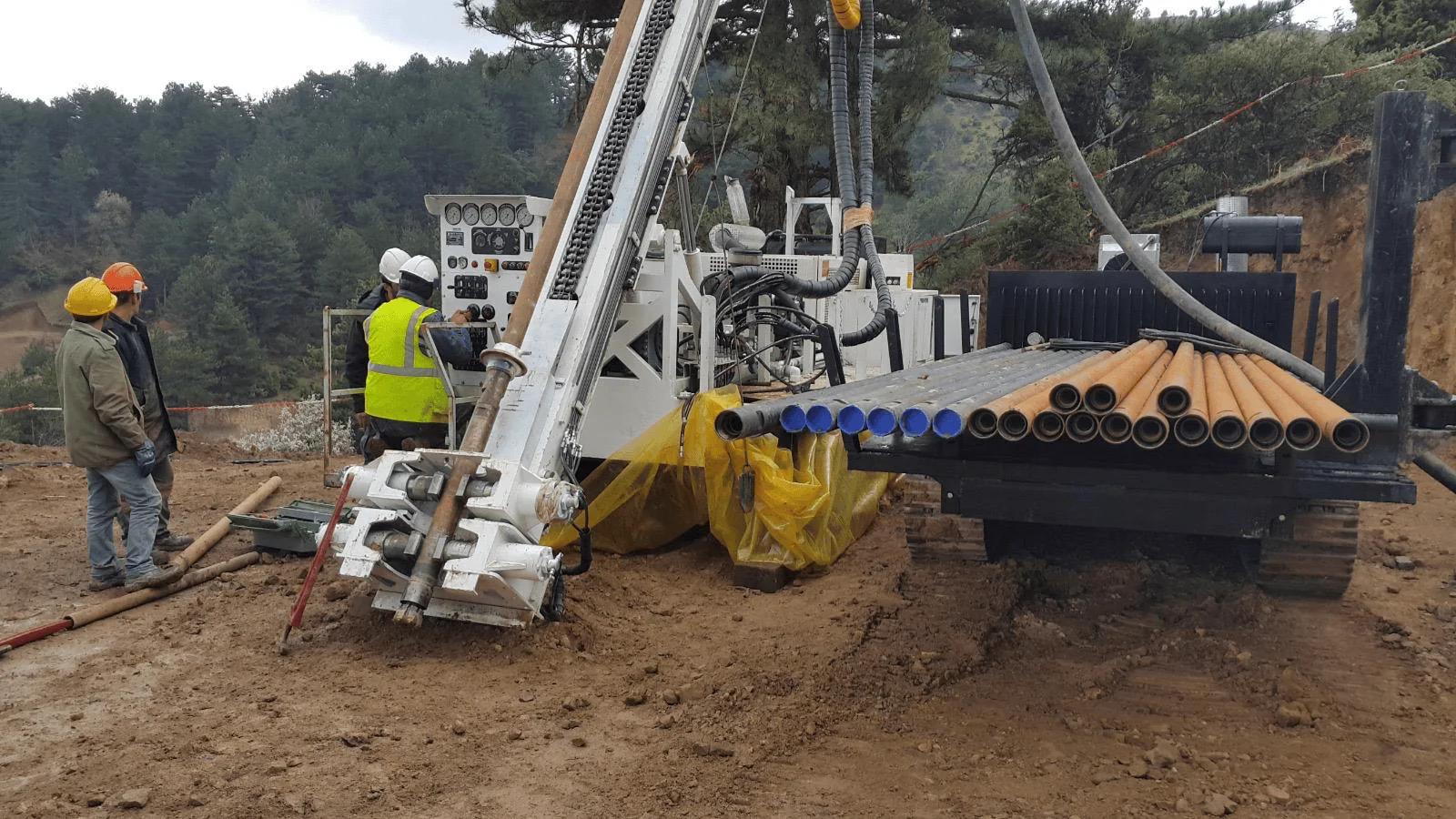
Reverse circulation drilling collects rock cuttings through an air-driven system. We assess its suitability against the sampling objectives, ground and water conditions, and the practical requirements of the proposed exploration program.
01
Suitable applications
Reverse circulation drilling is considered for mineral exploration programs that require cuttings collected at defined intervals. Its suitability depends on the sample objective and site conditions. The method should be selected through a review of the formation, water conditions and the requirements for representative sample collection.
02
Operational approach
Planning begins with the relationship between the drilling equipment, the air supply and the sample collection system. Access, expected ground conditions and water need to be reviewed before the operating arrangement is selected. This helps establish a practical scope and clear expectations for the field team.
03
Sample quality
The usefulness of an RC sample depends on a consistent collection and handling process. Agreed intervals, appropriate splitting, clear identification and attention to contamination risk support traceability. The sampling protocol should reflect the client’s exploration objectives and be understood by the personnel involved.
04
Safety & environment
RC operations call for particular attention to pressurised systems, dust, noise and movement around the rig. The layout of the work area, the handling of collected material and routine housekeeping are also relevant to a well-managed operation. Appropriate controls need to reflect the conditions at each site.
05
Plan the program
Share the project location, expected geology, sampling intervals and the intended schedule, together with any known water or access constraints. We can then discuss whether reverse circulation is appropriate and identify the equipment and support requirements to be confirmed before mobilisation.
Questions, answered
What sample does RC drilling produce?
RC produces cuttings. It does not produce continuous core.
Is RC right for every exploration program?
No. Selection depends on ground and water conditions, sample objectives and project requirements.
How is the equipment arrangement selected?
We review the formation, groundwater, sampling requirements and site access together. Your project brief provides the basis for discussing an appropriate RC equipment and support arrangement.
Share the objectives of your exploration program, the location and the proposed schedule. With an understanding of the ground conditions, access and sampling requirements, we can begin a considered discussion of the drilling approach and the support your operation will need.